Blog
Blog article
Boost efficiency, cut costs – with expert advice at an early stage
![[Translate to English:] Effizienz steigern, Kosten senken – durch frühzeitige Expertise](/fileadmin/_processed_/6/4/csm_effizienz-steigern-kosten-senken-dur-fruehzeitige-expertise_b7eed57ade.jpg "[Translate to English:] Effizienz steigern, Kosten senken – durch frühzeitige Expertise")
The state of play in May 2026: The plastics market is under intense competitive pressure: rising raw material prices, global competition and increasing demands for quality and sustainability are posing challenges for both designers and technical buyers. In this environment, it is not only the finished component that determines economic success, but the design phase itself. This is precisely where our design support services come in: rather than a complete new development, the focus is on the targeted optimisation of existing designs. The aim is to design components for efficient production, create efficient mould concepts and sustainably reduce overall costs.
Consultancy and support right from the start
One of the most common causes of high tooling costs or subsequent manufacturing problems is a design that is not suitable for injection moulding. Wall thicknesses, draft angles, undercuts or material selection are often only critically examined at a late stage – at a point when changes are often costly and time-consuming.
Our consultancy deliberately starts earlier: we support you in evaluating and optimising your components as early as the concept phase. Among other things, the following aspects are taken into account:
- Material selection (plastics and rubber)
- Component geometry with regard to manufacturability
- Tolerance concepts and functional integration
- Tooling feasibility
- Assembly and sub-assembly compatibility
The result: designs that are not only functionally sound but can also be produced cost-effectively.
Case study: Urimat
Real-world KREMER projects demonstrate just how beneficial early-stage design support can be:
Urimat: In the Urimat project, the focus was on optimising functional plastic components for use in demanding operating conditions. Through targeted adjustments to geometry and material:
- component service life was increased
- manufacturing stability was improved
- and scrap was reduced
At the same time, simplifications to the tooling were implemented, which had a direct impact on investment costs.
In the latest project with our client Urimat, the focus was on economic optimisation. In particular, adaptation to a flexible mould system played a decisive role here. Through design adjustments, two variants were efficiently realised using a modular mould concept.
These examples show that even small design changes can have significant economic effects – if they are identified at an early stage. These changes were validated using specially printed prototypes.
Mould systems with interchangeable inserts: flexibility as the key
A central component of modern injection moulding strategies is the use of moulds with interchangeable inserts. This concept makes it possible to produce different component variants within a single base mould.
Advantages at a glance:
- Reduced mould costs: Instead of multiple complete moulds, a base mould with variable inserts is used.
- High flexibility: Changes or variants can be implemented quickly.
- Shorter time-to-market: Adjustments can be made without a complete redesign of the mould.
- Optimised stock management: Fewer tools mean less organisational effort.
Our accompanying design services ensure that the component is optimally tailored to this tool concept.
Assembly expertise: More than just the individual part
A factor often underestimated in plastics design is the consideration of the assembly. Individual parts are often optimised in isolation – without giving sufficient consideration to subsequent assembly.
This presents significant potential for savings:
- Reduction in the number of individual parts through functional integration
- Simplification of assembly processes
- Avoidance of tolerance chain issues
- Optimisation of joining techniques (e.g. snap-fit connections)
We analyse not only the individual plastic part, but also the interaction within the entire assembly. This results in solutions that are easy to assemble, robust and cost-effective.
Our tip: Invest early, reap long-term benefits
The accompanying design service is not an additional expense, but a strategic investment. Those who focus on production-oriented design, well-thought-out tooling concepts and assembly optimisation right from the early stages ultimately benefit from lower overall costs, more stable processes and shorter development times.
If you wish to optimise existing designs or set up new projects efficiently, it is worth getting in touch at an early stage. Contact us now.
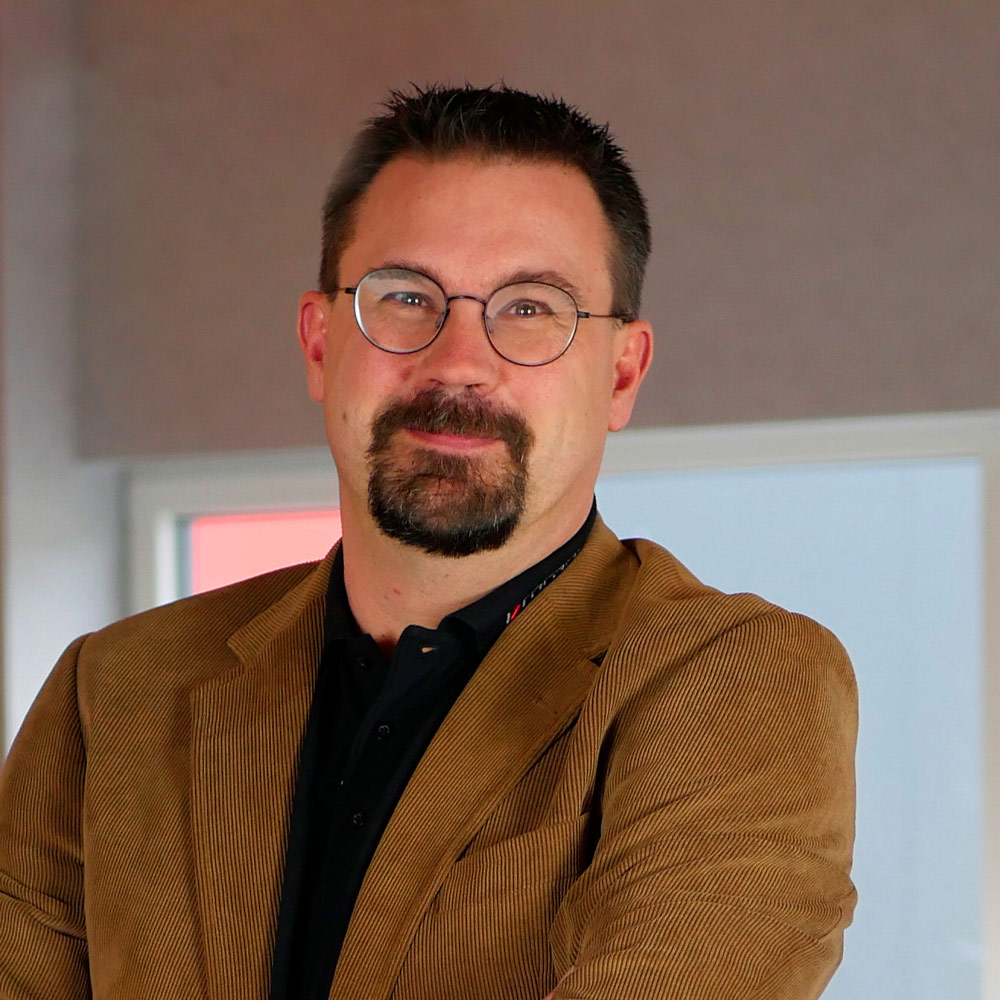
Timo Eibelshäuser is a Technician for Plastics and Rubber Technology and Key Account Manager at KREMER Technology GmbH. With over 20 years of experience, he supports clients from the initial CAD design to the finished product. His profound technical expertise and passion for innovation make him a trusted expert in bespoke industrial solutions.

KREMER - the specialist for customised elastomer and plastic products
KREMER was founded in 1965 and has been part of the REIFF Group since 1995. KREMER focuses on the product groups of seals, O-rings and moulded parts made of rubber, plastic and thermoplastic elastomers. Two-component products, rubber-metal compounds, sponge rubber profiles, rubber profiles and hose rings complete the extensive product range.
Press contact:
Kremer Technology GmbH
Tim Oettmeier
Kinzigstr.
9
63607 Wächtersbach
Phone: 06053 – 61610
E-mail:
tim.oettmeier@kremer-tec.de